–
This is an excerpt from Chi Longevity’s monthly newsletter. To receive the upcoming editions, featuring curated research and expert insights on longevity delivered directly to your inbox each month, subscribe here.
We keep adding years to life. The harder question is how many of them we actually get to enjoy.
A major new analysis in The Lancet Public Health brings it into focus. Around the world, people are living longer, but the number of years lived in good health has not kept pace. Few places show this more clearly than Singapore, which ranks first globally for both life expectancy and healthy life expectancy (GBD 2023), yet still has a significant gap between lifespan and healthspan.
The Healthspan Gap
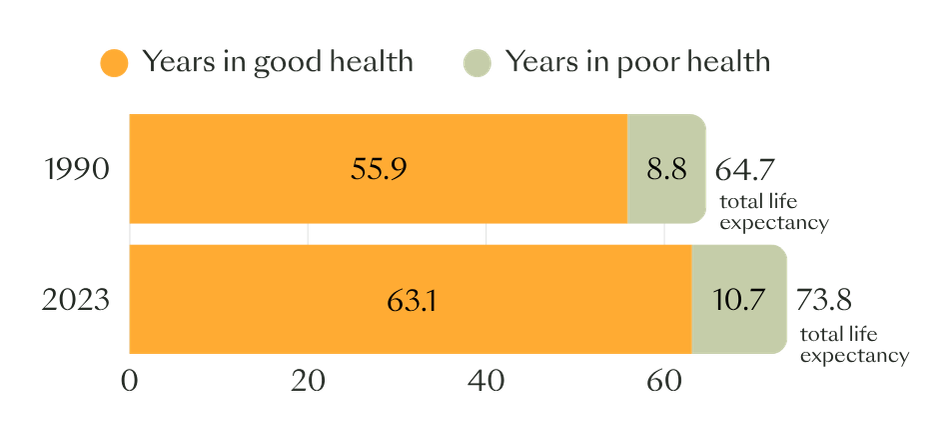
Since 1990, life expectancy has risen faster than healthy life expectancy, and the gap between the two keeps growing. In part this is a sign of success: we have become very good at keeping people alive through chronic illness, while the work of preventing that illness from occurring in the first place has lagged behind.
Source: The Lancet Public Health (2026).
The Singapore Paradox
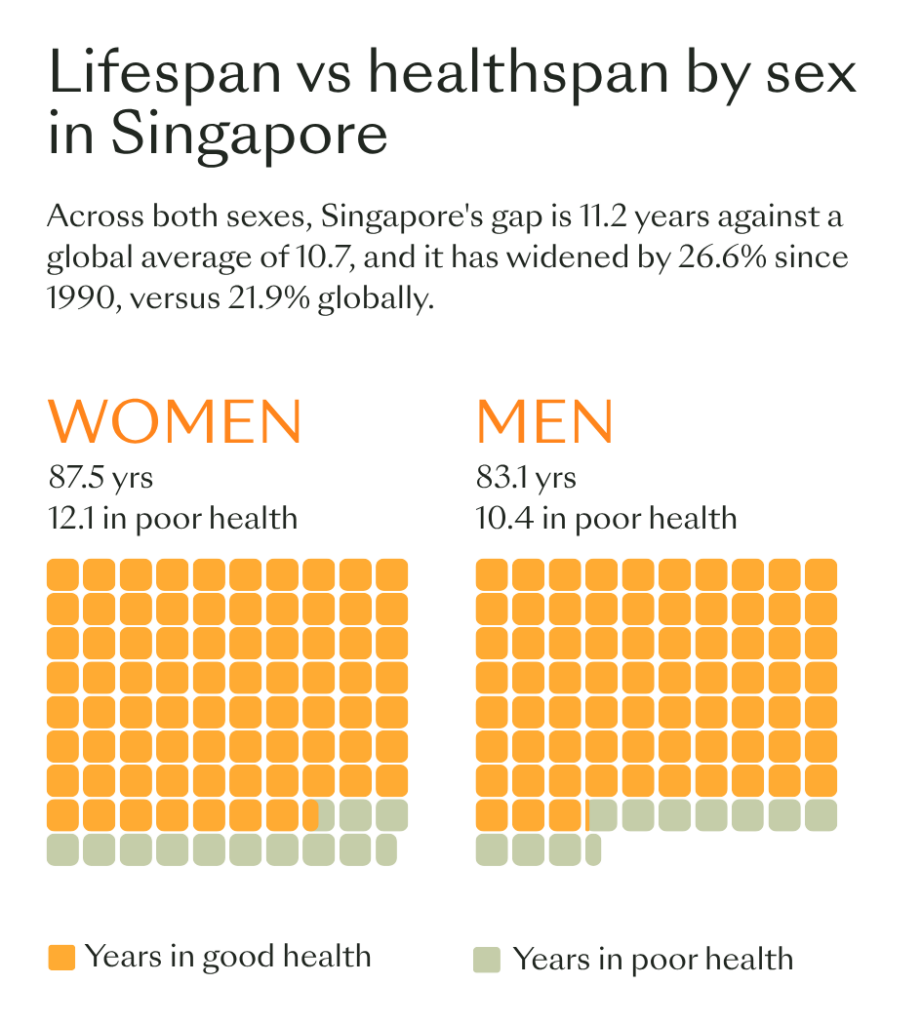
Singapore is well known for the length and quality of its lives. Yet the same analysis shows its healthspan gap widening faster than the global average, with women in particular spending more of their later years in poor health.
Even in one of the world’s longest-living populations, living longer does not necessarily mean living healthier.
Source: The Lancet Public Health (2026).
What Steals The Healthy Years
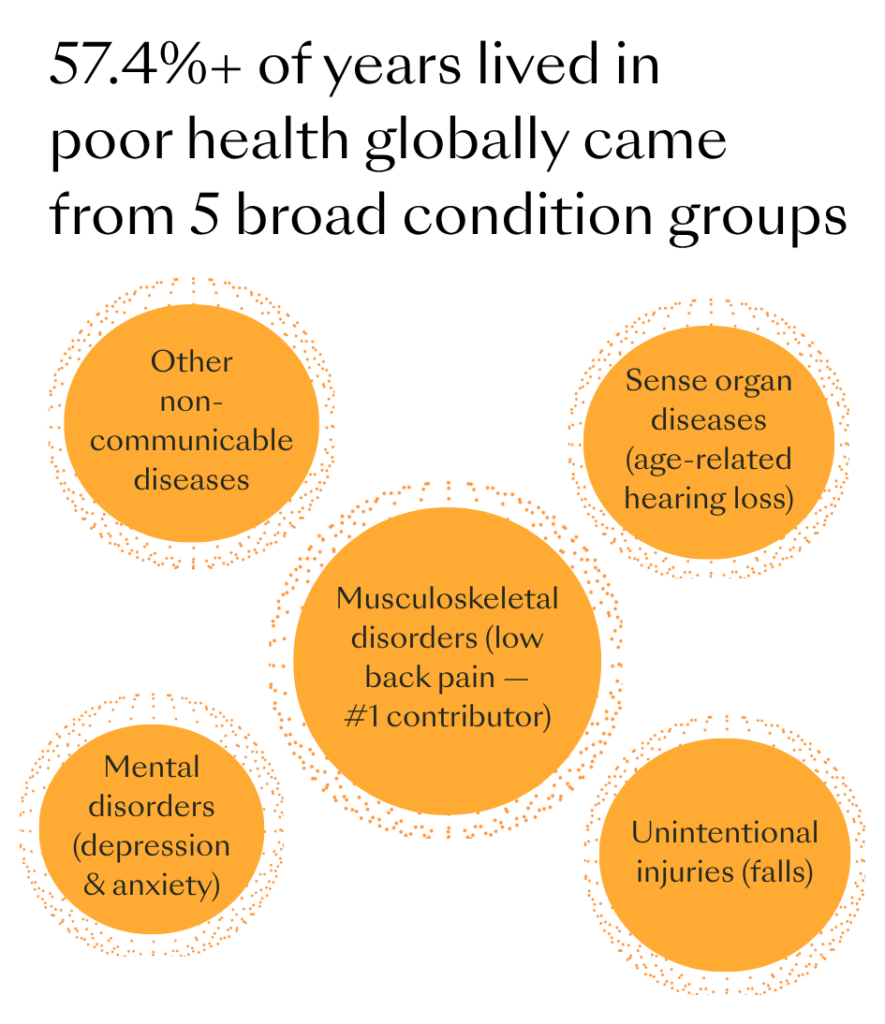
The conditions that erode our healthy years are not only the ones we expect. Heart disease matters (it’s one of Singapore’s top five) but more than half of the years lived in poor health globally come from five broad groups of conditions, including musculoskeletal and mental health conditions, sensory conditions and injuries.
Musculoskeletal conditions, driven mainly by low back pain, were the single largest contributor. Depression and anxiety, age-related hearing loss and falls also featured prominently. Healthy ageing, the data shows, is about more than the conditions that shorten life. It is also about protecting how well we move, think, function and live.
Source: The Lancet Public Health (2026).
Much Of It Is Within Our Influence
The good news is that many of the risk factors driving Singapore’s gap are ones we can influence: high fasting blood sugar, high BMI, high blood pressure and diet.
The response is simple and familiar : move regularly, pairing strength work for the muscles and joints with aerobic exercise for blood sugar and blood pressure. Eat for metabolic health. Protect your sleep, and manage stress before it builds.
The goal is to turn added years of life into added years of good health, through prevention, earlier intervention, and rehabilitation.
This is also central to how we practise healthy longevity medicine at Chi Longevity: understanding your health and how you are ageing earlier, then using those insights to guide personalised, evidence-based action over time.
Healthy ageing is about more than physical fitness. How well the brain and body work together matters too. SPARKD by Chi Longevity, our personal training studio at Four Seasons Hotel Singapore, trains both at once through a dual-task method that layers cognitive challenge onto physical exercise, bringing strength, balance, focus and reaction time into every session. The intro package begins by exploring your current physical and cognitive performance, before equipping you with a personalised plan, applied across 2 x 1:1 Personal Training sessions using the SPARKD method and equipment.