The word “longevity” is everywhere. But there is a meaningful difference between a wellness experience and a clinically grounded longevity assessment, and that difference starts with what gets measured.
The longevity space has grown rapidly. With it has come a wide range of clinics, programmes, and platforms. The scope and depth of testing offered varies significantly, and this affects the quality of insight available to the individual.
A comprehensive longevity assessment goes beyond routine blood panels and single-score reports. Ageing is not one process happening at the same speed everywhere in the body, and no single test can fully capture it.
The principle is straightforward: measure what is likely to change clinical decisions. That means looking across multiple systems, using validated functional tools alongside molecular ones, and treating results as a starting point, not a final verdict.
Here is what a comprehensive longevity assessment should include, and why each element matters.
Key Takeaways
- A comprehensive assessment uses multiple biological ageing clocks (blood-based, epigenetic, inflammation, microbiome) rather than a single score, since different body systems age at different rates.
- NAD+ levels are tested before any supplementation decision — if levels are already adequate, more supplementation is unlikely to add meaningful benefit.
- VO2 max and grip strength are used as practical, repeatable functional markers tied to cardiovascular health and physical resilience.
- Olfactory (smell) testing — rarely included in standard checkups — is used here as a marker linked in research to frailty risk and unhealthy ageing.
Biological ageing clocks, and why one is rarely enough
Biological age testing has captured significant interest, and for good reason. Understanding how the body is ageing at a biological level, not just a chronological one, is a meaningful shift in how we think about personalised health.
But one important nuance is frequently overlooked: different parts of the body do not always age at the same rate. Research suggests that metabolic function, immune activity, vascular health, and the gut microbiome can each show different ageing patterns in the same individual. A single clock captures one dimension of this picture. Combining multiple clocks provides a more complete view of how different systems are ageing.
This is why our programmes use multiple biological ageing clocks. Depending on the clinical picture, these may include:
- Blood-based clocks, reflecting system-level physiological signals
- Epigenetic clocks, examining molecular patterns in DNA methylation associated with biological ageing
- Inflammation clocks, offering insight into immune activity and inflammatory tone, an area increasingly linked to age-related health trajectories
- Microbiome clocks, looking at gut-related signals and their potential relationship to health over time
The aim is not to produce the youngest-possible number. It is to understand which systems may be under strain, where targeted support may be appropriate, and whether any interventions are moving those signals in a meaningful direction. Single results are informative; repeated measurement over time is what makes the data truly actionable.
Cardiovascular health: why it deserves a closer look
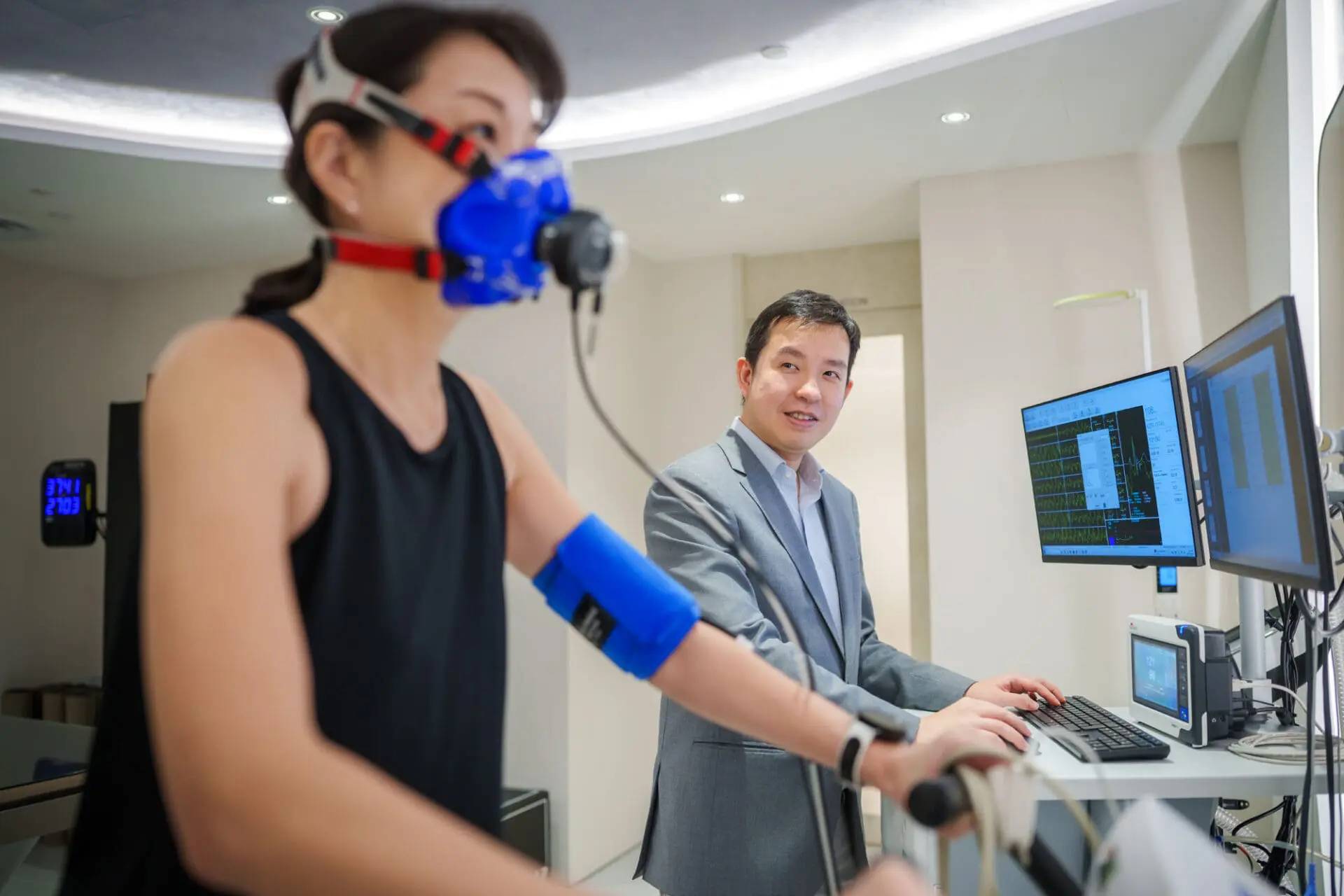
Heart and lung health sit at the centre of longevity medicine. A thorough evaluation looks beyond standard blood markers to assess vascular, respiratory, and aerobic function across several interconnected markers.
Cardiovascular risk analysis examines the full picture of vascular and metabolic risk, including markers that extend beyond standard cholesterol panels.
Lung function testing reflects something important: how well the body is delivering oxygen to the tissues that need it. Declining lung function is associated in research with reduced physical capacity and poorer long-term health outcomes and can be present without any obvious symptoms.
VO2 max, a measure of aerobic capacity, is identified in research as an important predictor of cardiovascular health and functional reserve with age. Some individuals who exercise regularly may still have lower aerobic capacity than expected for their age. Without measuring it directly, there is no way to know where a person stands, or how to design their training most effectively. We use it as a practical, repeatable baseline that informs personalised movement programmes and tracks progress over time.

NAD+ testing: measure before you intervene
NAD+ (nicotinamide adenine dinucleotide) is a coenzyme involved in cellular energy production and DNA repair. Levels tend to decline with age and under chronic stress, which has led to significant interest in NAD+ precursors, including NMN, as potential longevity tools.
The clinical reality is more nuanced. NAD+ levels vary considerably between individuals. Not everyone starts from a depleted baseline, and supplementing without knowing your starting point means the approach is not informed by individual data. If levels are already adequate, additional supplementation is unlikely to provide additional meaningful benefit, based on current evidence. If something else is driving depletion, chronic inflammation, for example, a supplement addresses the symptom, not the cause.
Testing NAD+ levels before supplementing allows for a more targeted approach, informed by the individual’s baseline. This is why we test NAD+ as a standard part of the assessment. The result informs whether supplementation is clinically warranted, at what dose, and how the response should be tracked over time. It is an example of a broader principle: intervene precisely, not by default.
Cognitive assessment: measure your baseline before you need it
Cognitive testing is most commonly associated with concerns about memory or decline. But its value in a longevity context lies in something more proactive: establishing a baseline before changes become apparent.
Cognitive function encompasses memory, attention, processing speed, and executive function. These can shift in response to many factors such as sleep quality, metabolic health, stress, medications, and age-related change. Without a baseline, it is genuinely difficult to distinguish a temporary fluctuation from a meaningful trend.
Research suggests that healthier eating patterns, staying mentally and physically active, and reducing sedentary behaviour are linked to better cognitive outcomes, even later in life and even in people with higher genetic risk.
Our cognitive assessment and training programmes are delivered through SPARKD by Chi Longevity, an innovative concept that brings together clinically approved tests in a format that is engaging, precise, and purpose-built for a longevity context. The purpose is to establish a starting point, interpret results in clinical context, and guide personalised strategies around movement, sleep, nutrition, and metabolic health, with repeat assessments over time to track whether those strategies are supporting cognitive stability.
Functional markers: what blood tests cannot show
Some of the most predictive markers of healthy ageing are not found in laboratory results. They are functional, measurable in how the body actually performs day to day.
Grip strength is consistently associated in research with cardiovascular function, muscle health, and broader measures of physical resilience. Simple to assess and reproducible, it provides a meaningful signal about systemic health that complements the clinical picture.
Olfactory function — the ability to detect and identify smells, is less commonly included in traditional assessments, but the evidence supporting its relevance is growing. Loss of smell becomes more common with age and has been associated in research with markers of unhealthy ageing, including frailty risk. Changes can occur gradually and without obvious symptoms, potentially affecting nutritional intake and appetite over time. We use olfactory testing as a practical screen and a baseline that can be monitored across assessments.
Gene panel: understanding your inherited starting point
Genetics do not determine your health destiny, but they do shape your risk landscape in ways that are clinically useful to know.
A gene panel can reveal predispositions relevant to cardiovascular health, metabolic function, nutrient processing, and cognitive risk. This does not mean those risks will materialise. It means the clinical team can prioritise monitoring and preventive strategies for the areas where the evidence most clearly supports early action.
We interpret genomic data alongside functional and physiological results, because it helps explain why certain markers look the way they do, and where personalised recommendations may be most relevant.
Digital biomarkers: wearable data that actually shapes the plan
Wearables and health-tracking apps now generate considerable data: resting heart rate, heart rate variability, sleep patterns, activity levels, and, where relevant, glucose patterns from continuous monitoring. This data has genuine clinical potential. But having more data is not the same as having more clarity.
Wearable data is most useful when it is interpreted alongside clinical results and connected to specific, personalised recommendations. Without that clinical context, it is easy to become overwhelmed by numbers, concerned about daily fluctuations, or unsure what action to take.
We integrate key digital biomarker data into a secure clinical dashboard alongside test results and the personalised care plan. This allows our clinical team to review patterns over time, and helps track whether changes to sleep, nutrition, exercise, or recovery are translating into measurable progress.

What distinguishes a comprehensive longevity assessment
Not all longevity assessments are built the same way. The depth of testing, the range of systems covered, and how results are used can vary significantly.
A genuinely thorough longevity assessment should cover multiple biological systems. It should include both molecular and functional measures. Results should be interpreted in clinical context, not as isolated numbers, and connected to a personalised plan with clear goals and defined reassessment points.
Tracking change over time is what turns an assessment into a longitudinal picture of how the body is ageing and responding. Testing is the foundation of the clinical process, not its conclusion, and the value lies not in the number you receive, but in what it tells us about where your biology is now, which systems may need support, and whether what we are doing together is making a meaningful difference.
Longevity is not a score. It is a picture, and the more complete that picture, the more precisely we can act on it.
References
- Tian YE, Cropley V, Maier AB*, Lautenschlager NT, Breakspear M, Zalesky A. Heterogeneous aging across multiple organ systems and prediction of chronic disease and mortality. Nature Medicine. 2023;29(5):1221–1231. doi:10.1038/s41591-023-02296-6
- Nie C, Li Y, Li R, et al. Distinct biological ages of organs and systems identified from a multi-omics study. Cell Reports. 2022;38(10):110459. doi:10.1016/j.celrep.2022.110459
- Lu JK, Guan L, Wang W, et al. The association between blood biological age at rehabilitation admission and physical activity during rehabilitation in geriatric inpatients: RESORT. GeroScience. 2024;46(5):4505–4515. doi:10.1007/s11357-024-01152-w
- Tay JH, Barros D, Wang W, Wazny VK, Maier AB*. Biological age measured by DNA methylation clocks and frailty: a systematic review and meta-analysis. The Lancet Healthy Longevity. 2025;6(10):100773. doi:10.1016/j.lanhl.2025.100773
- Sayed N, Huang Y, Nguyen K, et al. An inflammatory aging clock (iAge) based on deep learning tracks multimorbidity, immunosenescence, frailty and cardiovascular aging. Nature Aging. 2021;1:598–615. doi:10.1038/s43587-021-00082-y
- Ravikrishnan A, Wijaya I, Png E, et al. Gut metagenomes of Asian octogenarians reveal metabolic potential expansion and distinct microbial species associated with aging phenotypes. Nature Communications. 2024;15(1):7751. doi:10.1038/s41467-024-52097-9
- Burney PGJ, Hooper R. Forced vital capacity, airway obstruction and survival in a general population sample from the USA. Thorax. 2011;66(1):49–54. doi:10.1136/thx.2010.147041
- Gaesser GA, Hall SE, Angadi SS, Poole DC, Racette SB. Increasing the health span: Unique role for exercise. Journal of Applied Physiology. 2025;138(6):1285–1308. doi:10.1152/japplphysiol.00049.2025
- Gao T, Hu Y, Zhang H, et al. Aerobic capacity beyond cardiorespiratory fitness: Linking mitochondrial function, disease resilience and healthy aging. The FASEB Journal. 2025. doi:10.1096/fj.202500554R
- Yi L, Maier AB*, Tao R, et al. The efficacy and safety of β-nicotinamide mononucleotide (NMN) supplementation in healthy middle-aged adults: a randomized, multicenter, double-blind, placebo-controlled, parallel-group, dose-dependent clinical trial. GeroScience. 2023;45(1):29–43. doi:10.1007/s11357-022-00705-1
- Kuerec AH, Wang W, Yi L, et al. Towards personalized nicotinamide mononucleotide (NMN) supplementation: Nicotinamide adenine dinucleotide (NAD) concentration. Mechanisms of Ageing and Development. 2024;218:111917. doi:10.1016/j.mad.2024.111917
- Kuerec AH, Wang W, Fokke KDM, et al. Association between blood nicotinamide adenine dinucleotide levels and blood laboratory parameters at baseline and after nicotinamide mononucleotide supplementation in middle-aged healthy individuals. GeroScience. 2025. doi:10.1007/s11357-025-01968-0
- Ye KX, Sun L, Wang L, et al. The role of lifestyle factors in cognitive health and dementia in oldest-old: A systematic review. Neuroscience and Biobehavioral Reviews. 2023;152:105286. doi:10.1016/j.neubiorev.2023.105286
- Rojer AGM, Ramsey KA, Amaral Gomes ES, et al. Objectively assessed physical activity and sedentary behavior and global cognitive function in older adults: a systematic review. Mechanisms of Ageing and Development. 2021;198:111524. doi:10.1016/j.mad.2021.111524
- Leong DP, Teo KK, Rangarajan S, et al. Prognostic value of grip strength: findings from the Prospective Urban Rural Epidemiology (PURE) study. The Lancet. 2015;386(9990):266–273. doi:10.1016/S0140-6736(14)62000-6
- Grgic J, Tey SL, Huynh DTT, et al. Asian Reference Values for Handgrip Strength, Gait Speed, Five-Times-Sit-to-Stand Test, Muscle Mass and Calf Circumference. Journal of Cachexia, Sarcopenia and Muscle. 2026;17(1):e70216. doi:10.1002/jcsm.70216
- Nagururu NV, Bernstein IA, Voegtline K, Olson S, Agrawal Y, Rowan NR. The Association of Peripheral and Central Olfaction With Frailty in Older Adults. The Journals of Gerontology: Series A. 2023;78(7):1276–1283. doi:10.1093/gerona/glac237
- Loughnane M, Tischler V, Saifeldeen RK, Kontaris E. Aging and Olfactory Training: A Scoping Review. Innovation in Aging. 2024;8(6):igae044. doi:10.1093/geroni/igae044
- Lu JK, Wang W, Mahadzir MDA, et al. Digital biomarkers of ageing for monitoring physiological systems in community-dwelling adults. The Lancet Healthy Longevity. 2025;6(6):100725. doi:10.1016/j.lanhl.2025.100725
- Lu JK, Wang W, Soh J, et al. Characterizing biomarkers of ageing in Singaporeans: the ABIOS observational study protocol. GeroScience. 2025;47(3):3997–4008. doi:10.1007/s11357-025-01511-1
The information in this article is intended for general educational purposes only and does not constitute medical advice. Please consult a qualified healthcare professional for assessment and guidance relevant to your individual circumstances.